
Depop
Every secondhand item has a story
Timeline
4 Weeks
Role
UX Designer
Platform
Web
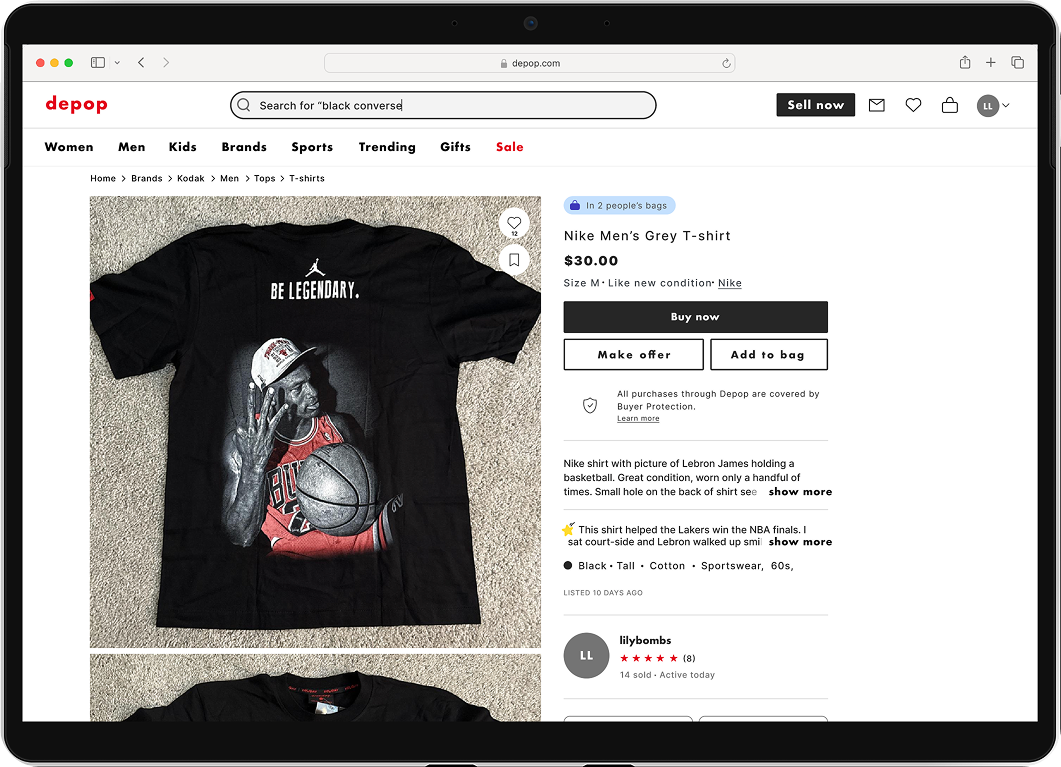
Preview
Depop “Second Story” in action!
Buyer Flow
The buyer views the new listing and reads the Second Story. Interest in the item increases, and the buyer decides to purchase.
Seller Flow
The seller creates a new listing and fills out the Second Story field.
Discover
Helping secondhand items feel passed on, not just sold
For this project, I designed a new Depop feature called “Second Story.” It gives sellers the option to include a short note or memory about the item they’re listing—something personal that adds context and emotional value.
The idea is to make the resale experience feel more human and authentic by highlighting the stories behind secondhand fashion, rather than just showing photos and prices.
Technical Info
Problem
Depop is known for individuality and creative self-expression, but the listing process itself often feels impersonal.
Goal
To design a feature that adds meaning to the resale process, strengthens Depop’s sense of community, and reminds users that every secondhand piece already carries a story worth telling.
A look at the competitors in secondhand e-commerce
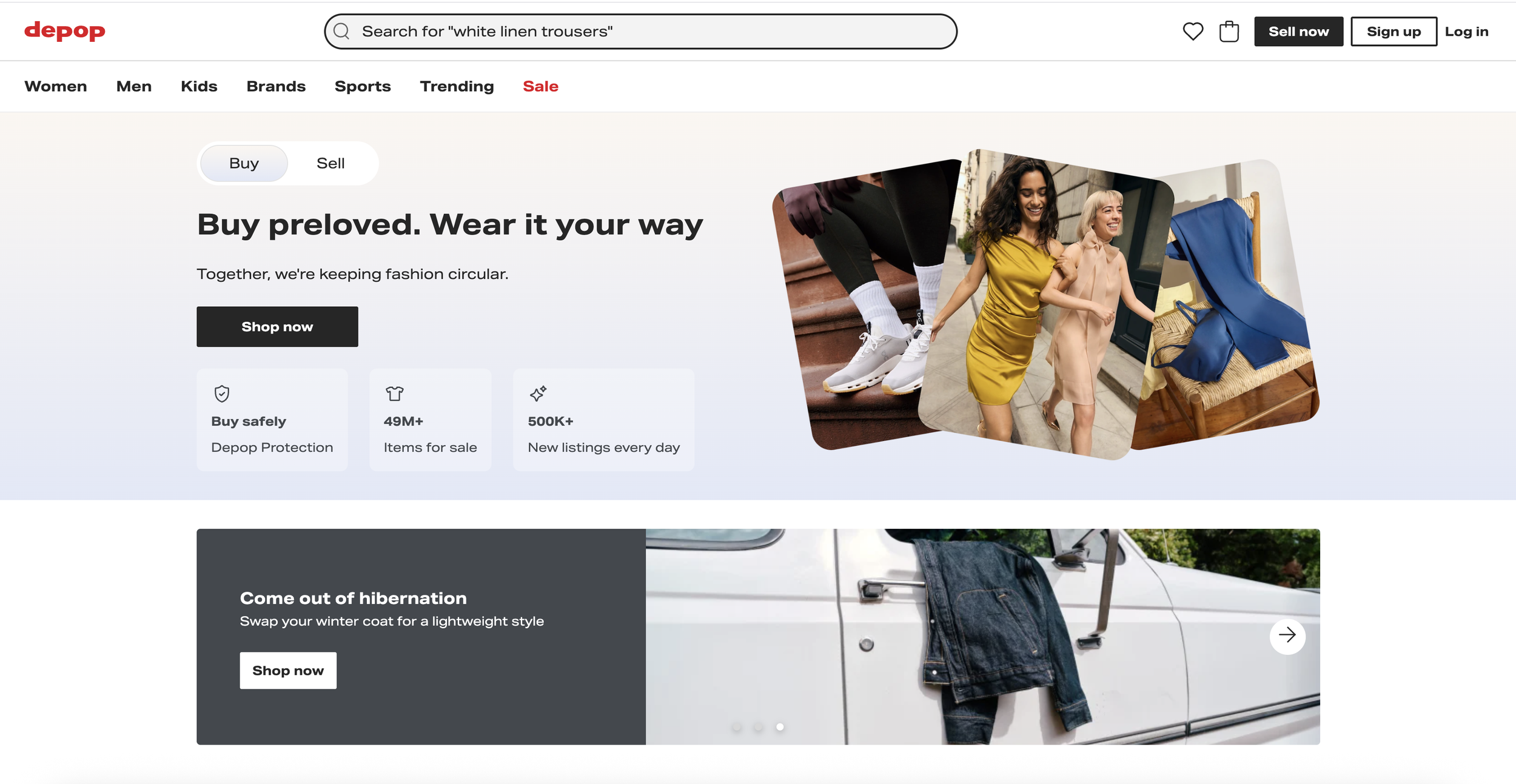
Depop homepage. Linked to Depop.
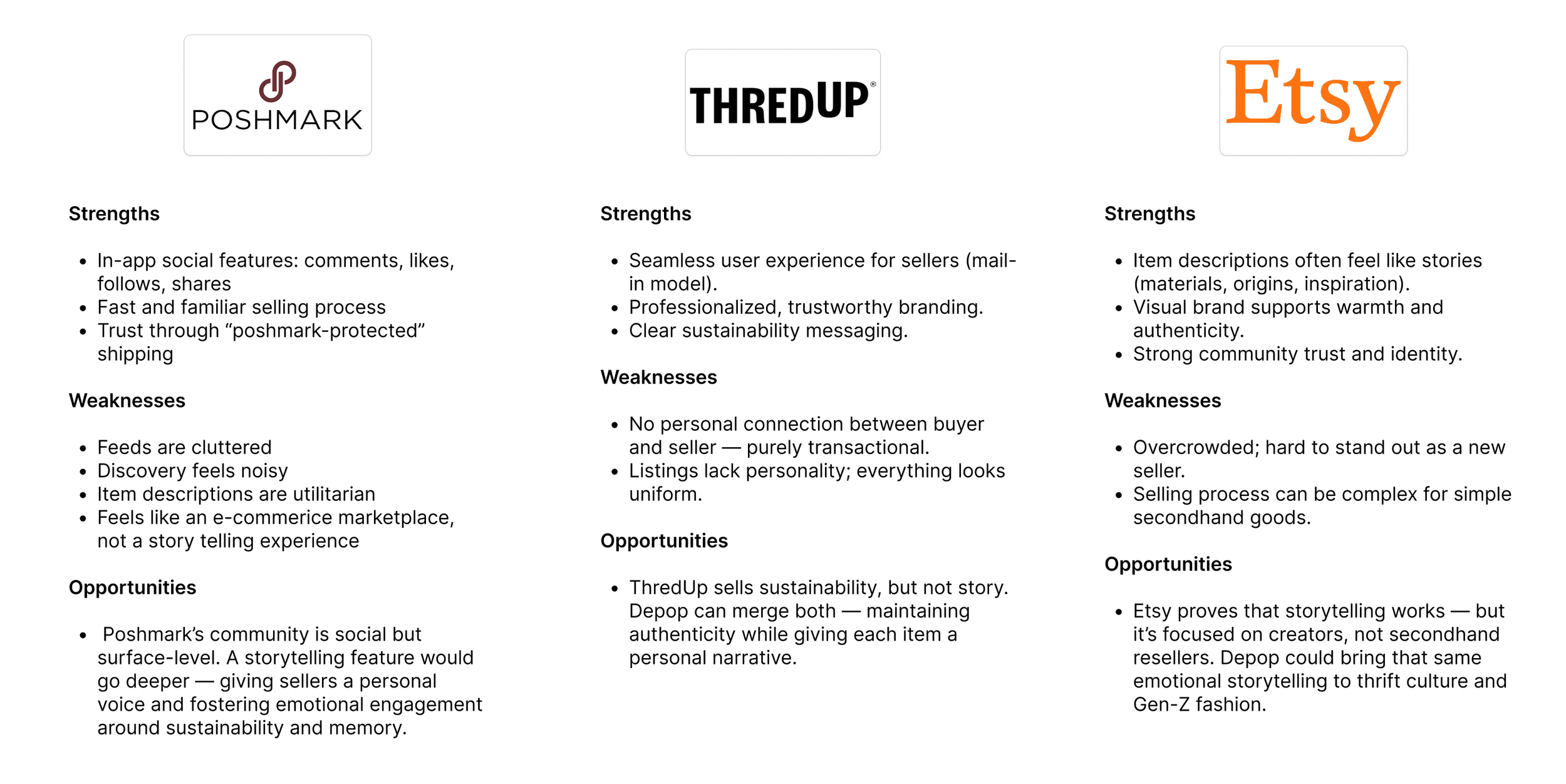
Competitors in the e-commerce resale space.
I asked questions like:
“When you list an item, what kind of details do you include, and why?”
“How do you hope a buyer feels when they receive something you sold?”
“Have you ever been drawn to an item because of the seller’s description, photos, or overall vibe?”
“Would knowing an item’s backstory make you more likely to buy or connect with it?”
“What does secondhand shopping represent to you — creativity, community, sustainability, or something else?”

“What feels genuine is when a story includes personal details.”
Gracie, 44, secondhand shopper
Tools used
Figma

“Sometimes I want someone to know it was meaningful to me.”
Padma, 37, vintage clothing dealer
Getting to know the audience
I began the discover phase by interviewing seven people. All participants had bought second hand items online and/or sold second hand items online.
“A little backstory gives it character.”
John, 35, vintage clothing buyer
About Depop
Depop is a peer-to-peer social commerce marketplace where users buy, sell, and discover unique fashion, primarily secondhand, vintage, and designer clothing. Founded in 2011 in Italy and now headquartered in London, it operates with over 35 million users as of 2024, blending the functionality of an online thrift store with the Instagram-like interface of a social network.
Process
Discover, Define, Develop, Deliver

Define
Defining users’ needs
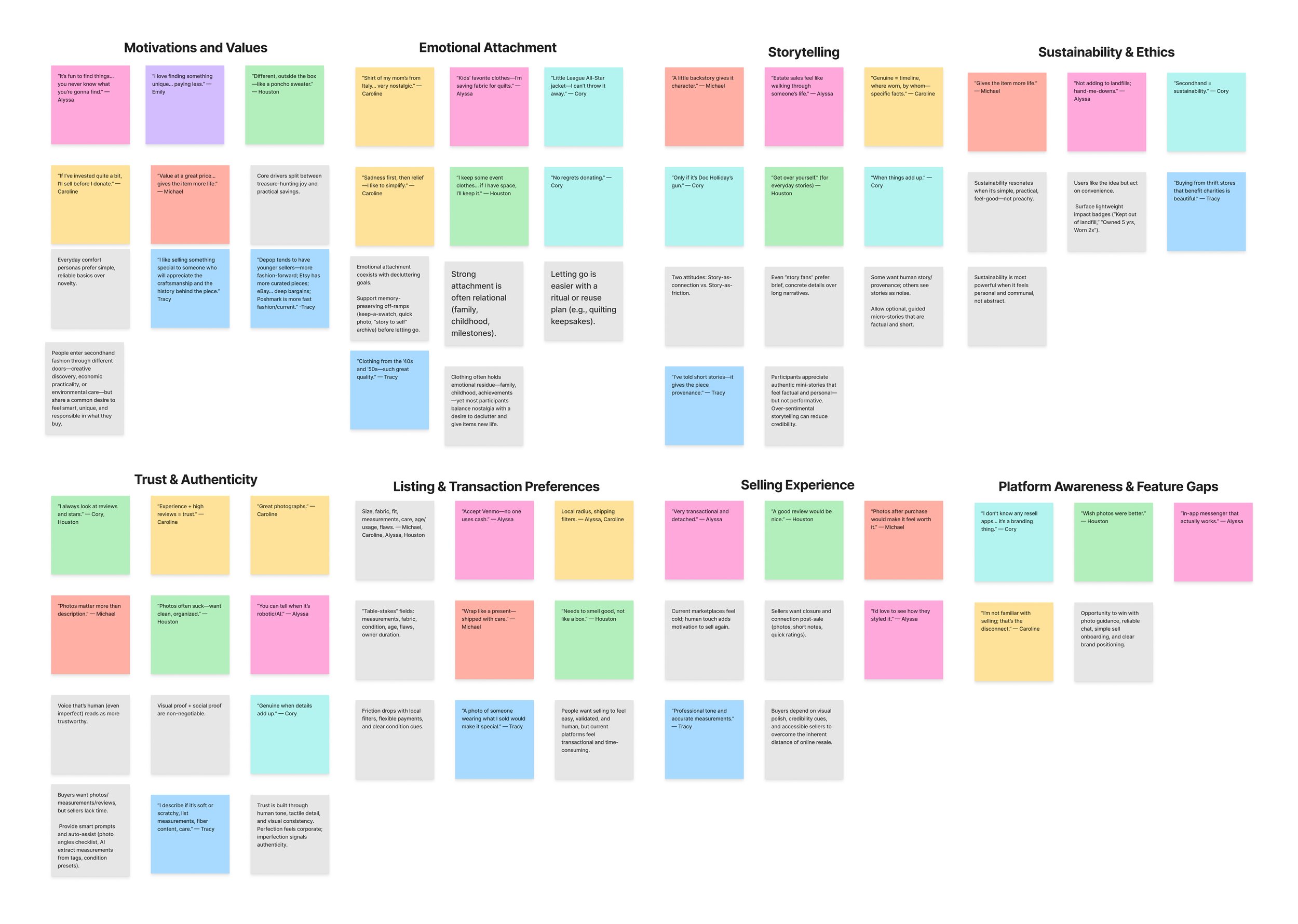
Affinity Map.
Key insights from affinity mapping
Trust is visual and social: Multiple clear photos, honest flaws, and reviews are decisive (all participants reinforce this).
Stories should be optional and short: “Timeline facts” work across skeptical and pro-story users; long sentiment turns many off.
Sellers crave post-sale connection: Lightweight feedback/photo loops motivate future selling and increase platform stickiness.
Practical sustainability resonates: “Second life” framing is motivating without moralizing.
Onboarding to sell is intimidating: Non-sellers cite uncertainty; tools for guided listings can unlock supply.
Empathizing with the users and bringing them to life
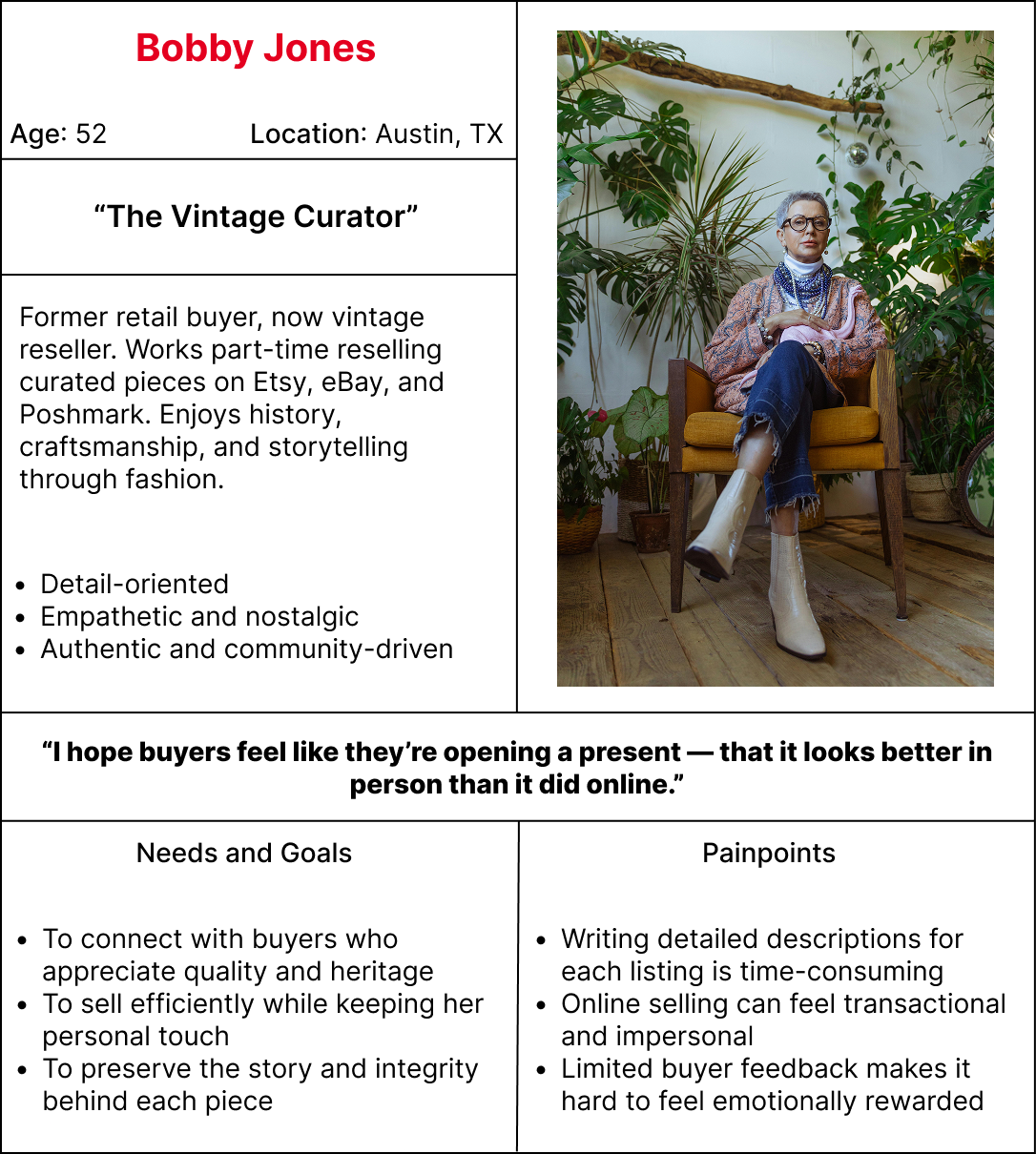
Persona 1: “The Vintage Curator”.
What’s the problem?
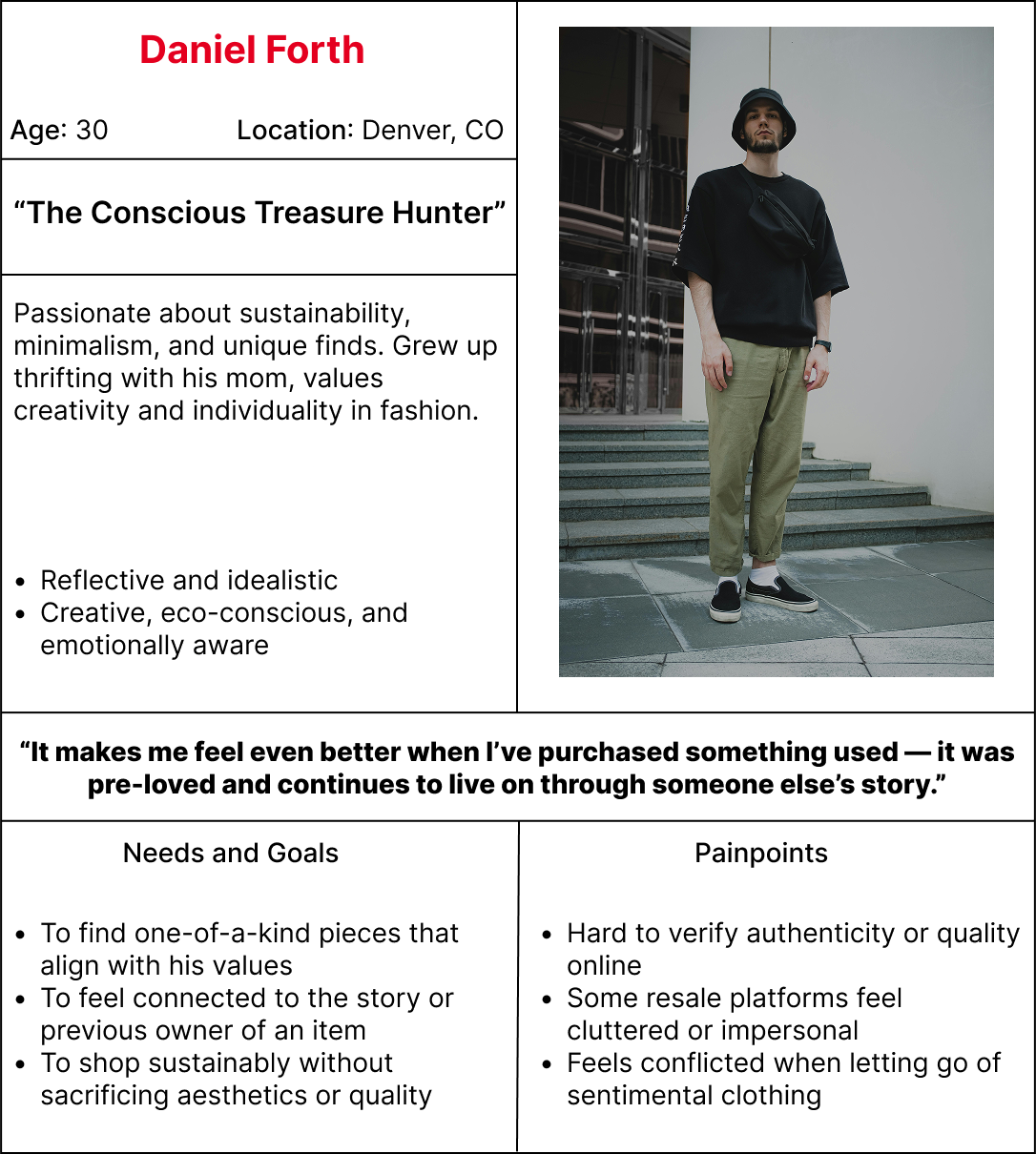
Problem Statement
Lack of Human Connection
Users lack a sense of human connection in secondhand transactions because current platforms don’t support simple, optional ways to share or experience the meaning behind items.
Goals for the secondhand shopper
Increase trust through more transparent listings
Helps users make confident decisions
Reduces returns, which saves business costs
Provide a more personal marketplace experience
Users get meaning, trust, and connection
Business earns repeat usage and positive word-of-mouth

Boost sales through improved listing quality
Buyers convert at higher rates
Sellers earn more
Depop profits from transaction fees
Enhance emotional connection and brand loyalty
Users feel part of a story-driven community
Depop becomes a differentiated resale platform
Persona 2: “Conscious Treasure Hunter”.
Persona 3: “The Practical Parent”.
Develop
Adding connection to Depop’s e-commerce platform
I began the develop phase by creating a feature set and user flow. I wanted the feature to feel like it would add a “human touch” to an otherwise impersonal transaction.
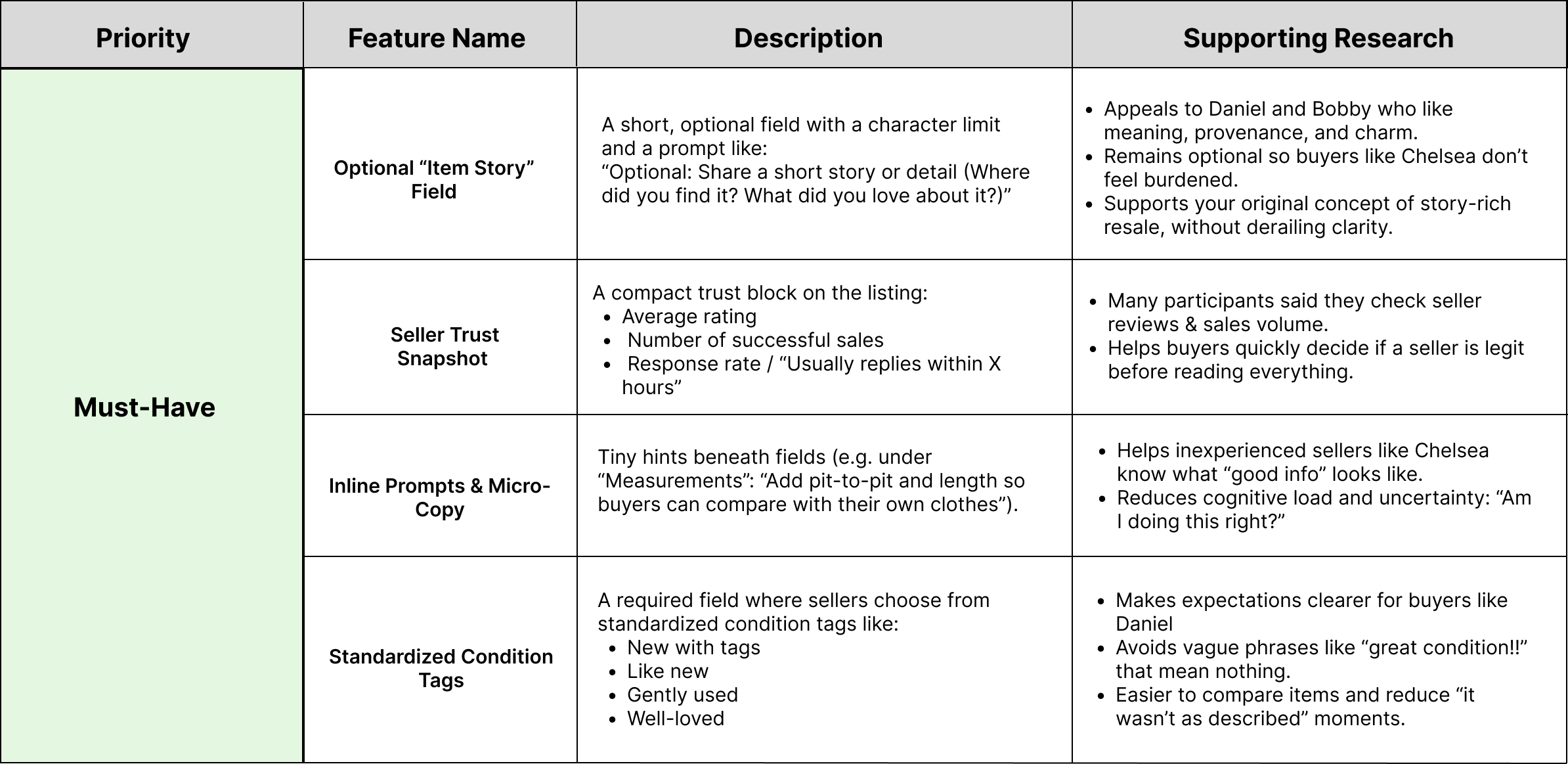
Must-haves of feature set. Linked to full feature set in Figma.
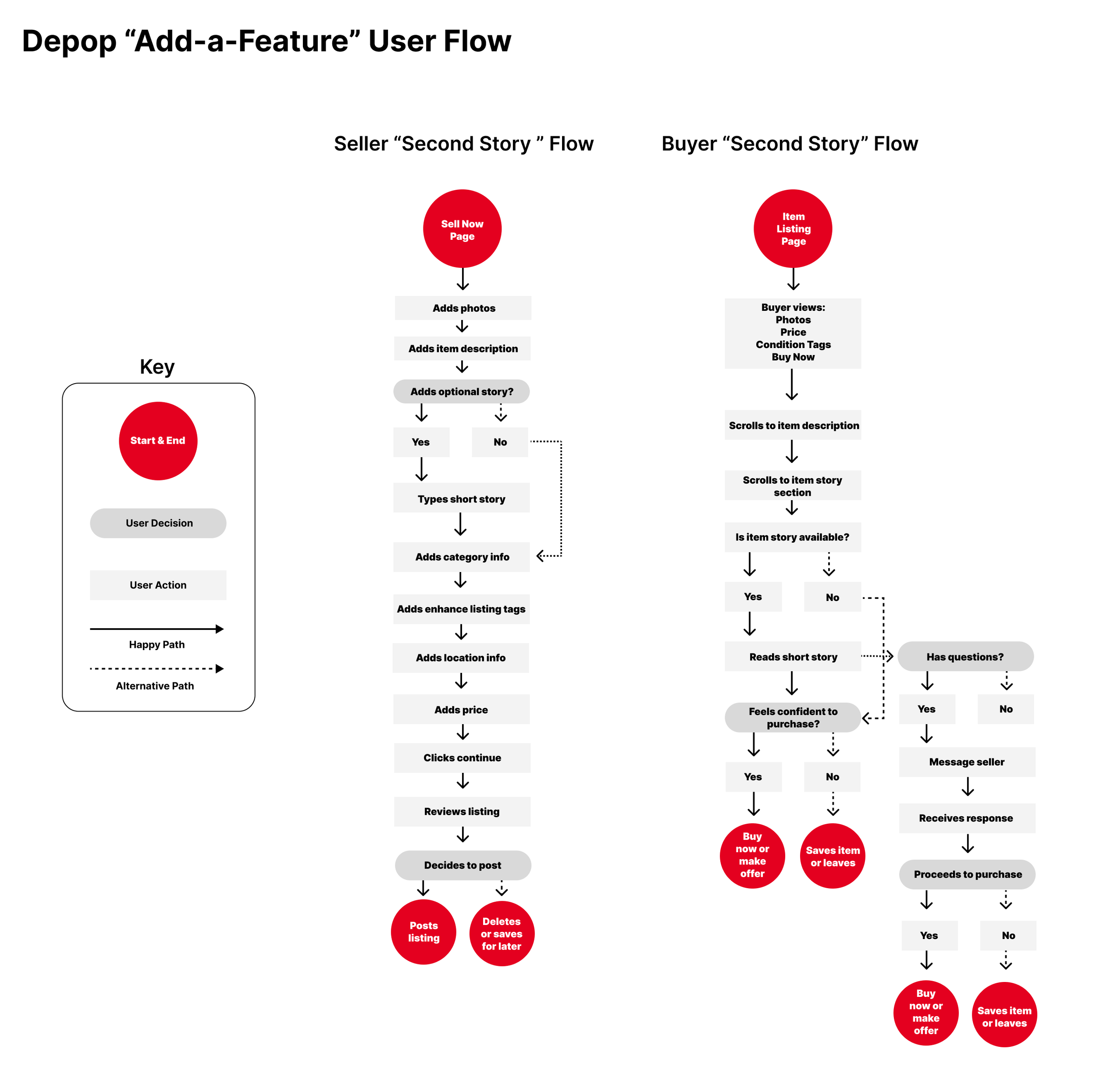
User flow showing how both a buyer and seller would interact with the feature.
Low-fidelity wireframes
I sketched wireframes for the two flows:
Seller creates listing: a seller creates a new listing and chooses to add the optional “Second Story” feature.
Buyer views listing: a buyer views a listing that includes the feature.
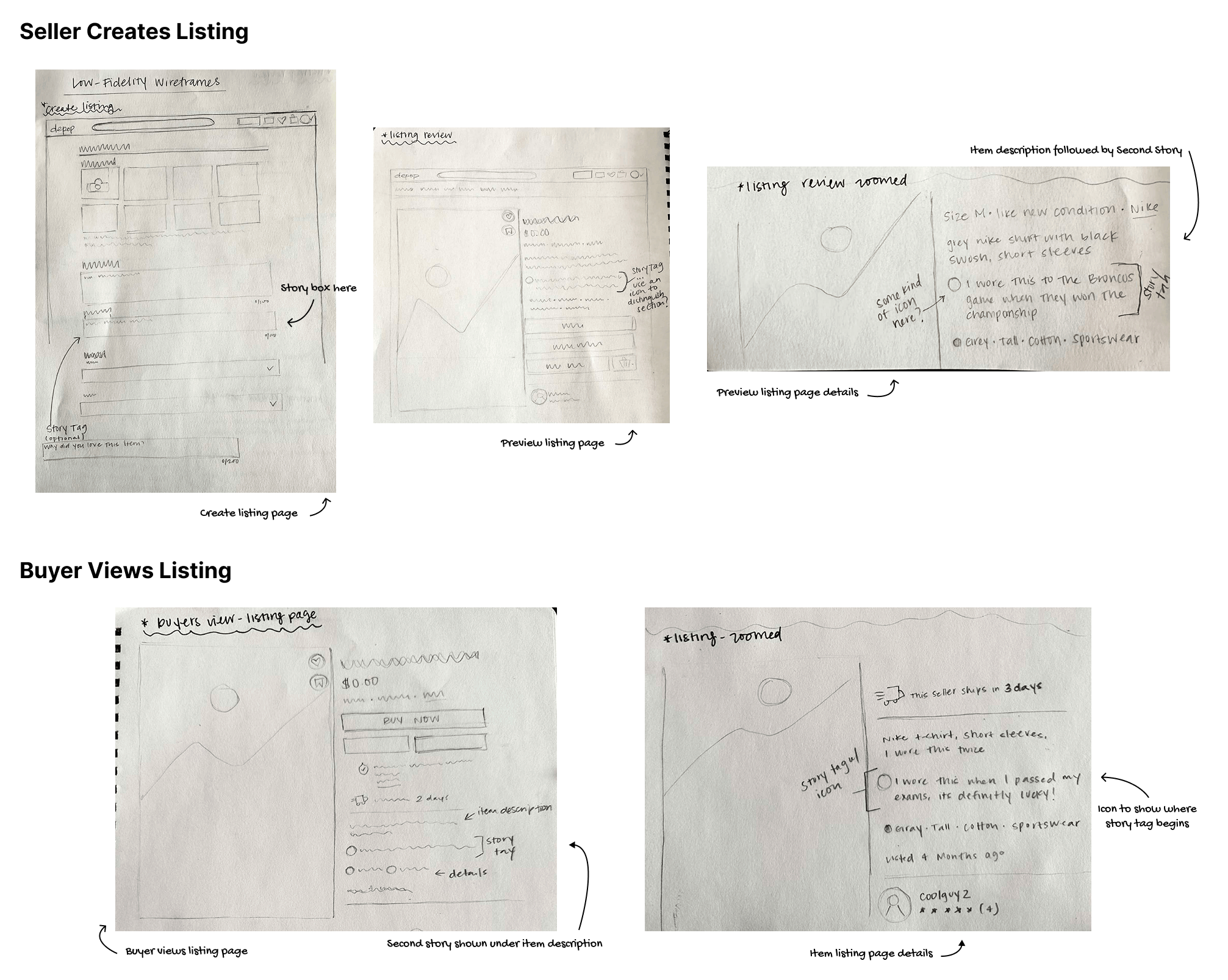
Low-fidelity wireframe sketches.
Low-fidelity usability testing and results
Mid-fidelity wireframes
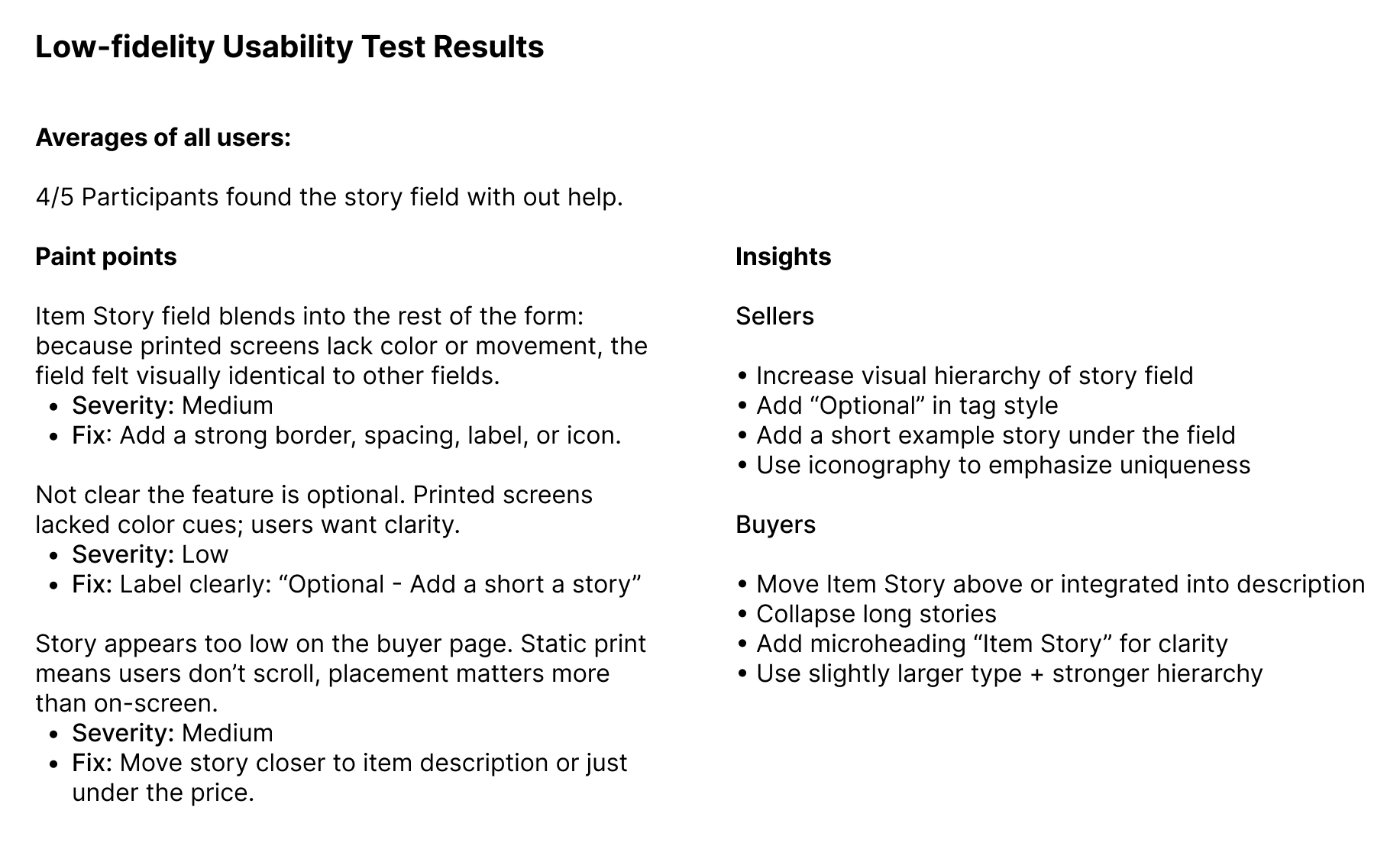
I tested the feature with five participants in person. The aim of testing was to see whether participants could understand, locate, and find value in the new “Second Story” feature using printed wireframes. I tested the following:
Sellers: Can they find and understand the story field in the printed screens?
Buyers: Can they locate and interpret the story snapshot in a printed listing?
First round of usability test results.
When moving into mid-fidelity, I decided to place the Second Story feature underneath the existing item description field, so that it was clear it was different from the description but remaining in proximity. User research indicated it is important to keep the design simple, even understated, as a significant number of users wanted the feature to remain optional. I created a small star icon to represent the feature, indicating to the user that something about the item is special.
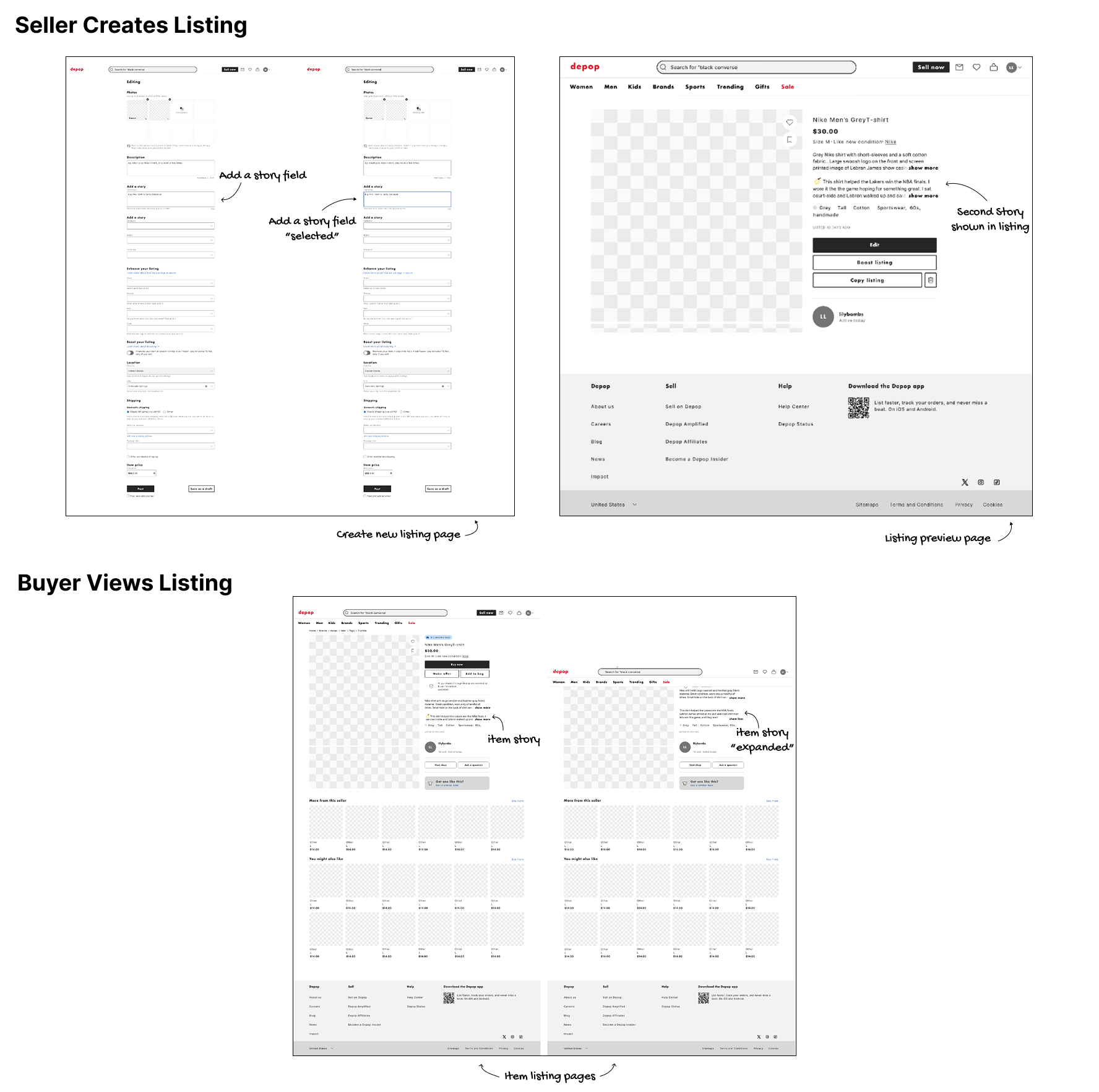
Mid-fidelity designs.
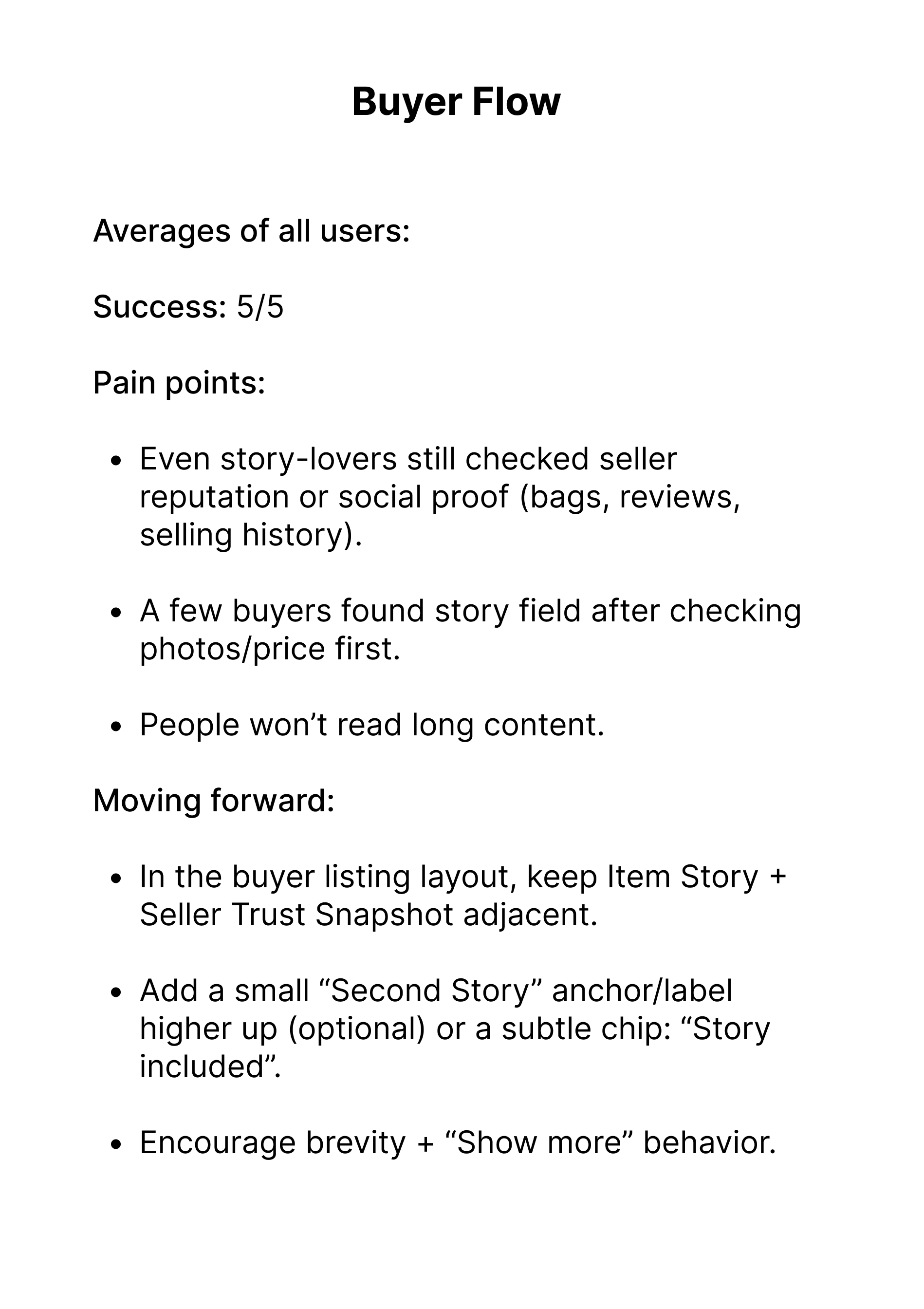
Final round of usability testing and results
I tested five participants in person using a Figma prototype. Participants were tested on the following two tasks:
Seller flow: Can the user locate the second story field, write a short story, review listing, and post?
Buyer flow: Can the user locate the second story, read and evaluate trust about the listing, then decide whether to buy, save, or message?

Deliver
Depop “Second Story” in action!
Buyer Flow
The buyer views the new listing and reads the Second Story. Interest in the item increases, and the buyer decides to purchase.
Seller Flow
The seller creates a new listing and fills out the Second Story field.
Final thoughts and takeaways
One of the biggest insights was that storytelling isn’t just about emotion — it’s also about trust. Even short bits of context helped buyers feel more confident and helped sellers feel more connected to the process.
What I learned
• Not every feature needs to appeal to every user.
• Optional design is often more respectful than forced engagement.
• Clear problem statements make everything else easier.
• Usability testing is about learning, not validation.
• Emotional design works best when it’s subtle and intentional.
What I’m most proud of
This project pushed me to keep strengthening my Figma skills. Recreating key parts of the Depop interface helped me better understand visual precision and the level of detail that goes into production-ready design. The research process also helped me solidify each step needed to turn an idea into a thoughtful feature concept.