
Caroline Designs
Bringing a small business to the digital marketplace
Timeline
4 Weeks
Role
UX Designer
Platform
Web
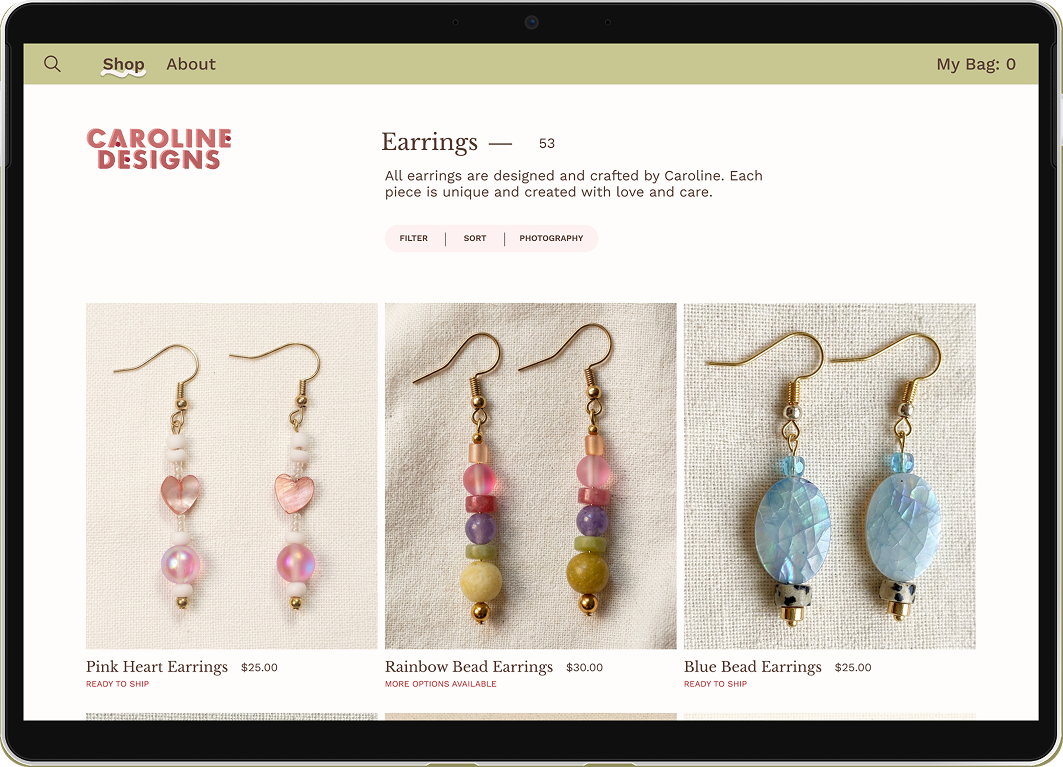
Preview
Caroline Designs site in action!
Purchasing a pair of handmade earrings
The shopper lands on the homepage, browses, selects a product, and completes a purchase.
Learning more about the maker
The shopper lands on the homepage, opens the product page, and decides to learn more about the artist.
Discover
Handmade items need a digital platform
This project focuses on designing a responsive website for a small, independent creative business. My client, an artist, makes handmade earrings. Her primary goal is to sell those earrings through a website that feels polished, trustworthy, and aligned with her creative identity.
I wanted to learn how potential customers browse, evaluate, and purchase handmade earrings online so that I could design a website that supports trust, product discovery, and sales.
Technical Info:
Problem
My client creates handmade earrings, but she does not currently have a dedicated website to sell them in a professional, clear, and easy-to-use way.
Goal
Create a website so potential customers may browse products, understand the brand, and feel confident enough to purchase online.
Competitors in the handmade e-commerce space
Competitors in the handmade e-commerce space.
I asked questions like:
“Tell me about a recent time when you bought something handmade or from a small business online.”
“What makes you keep browsing on a website versus leaving it?”
“When you come across a small brand or artist website, what helps you feel like you can trust it?”
“What makes a handmade jewelry brand feel memorable to you?”
“How important is the story behind the artist or maker when you’re deciding whether to buy?”
“If you think about your overall experience shopping for jewelry online, what matters most to you?”

“You have to have a connection, feel some sort of connection with the artist.”
Tracy, 34, handmade jewelry buyer.
Tools used
Figma

“If the website is aesthetically pleasing… I’ll stick around longer.”
Meredith, 58, handmade jewelry buyer.
Getting to know the Caroline Designs customer
I started by interviewing seven people: five in person and two remotely, all have purchased handmade goods both online and in person.
“I want to know exactly what it’s made of, its size, and then maybe… where it came from or who made it.”
Michael, 35, handmade jewelry buyer.
Process
Discover, Define, Develop, Deliver
Define
Defining user needs
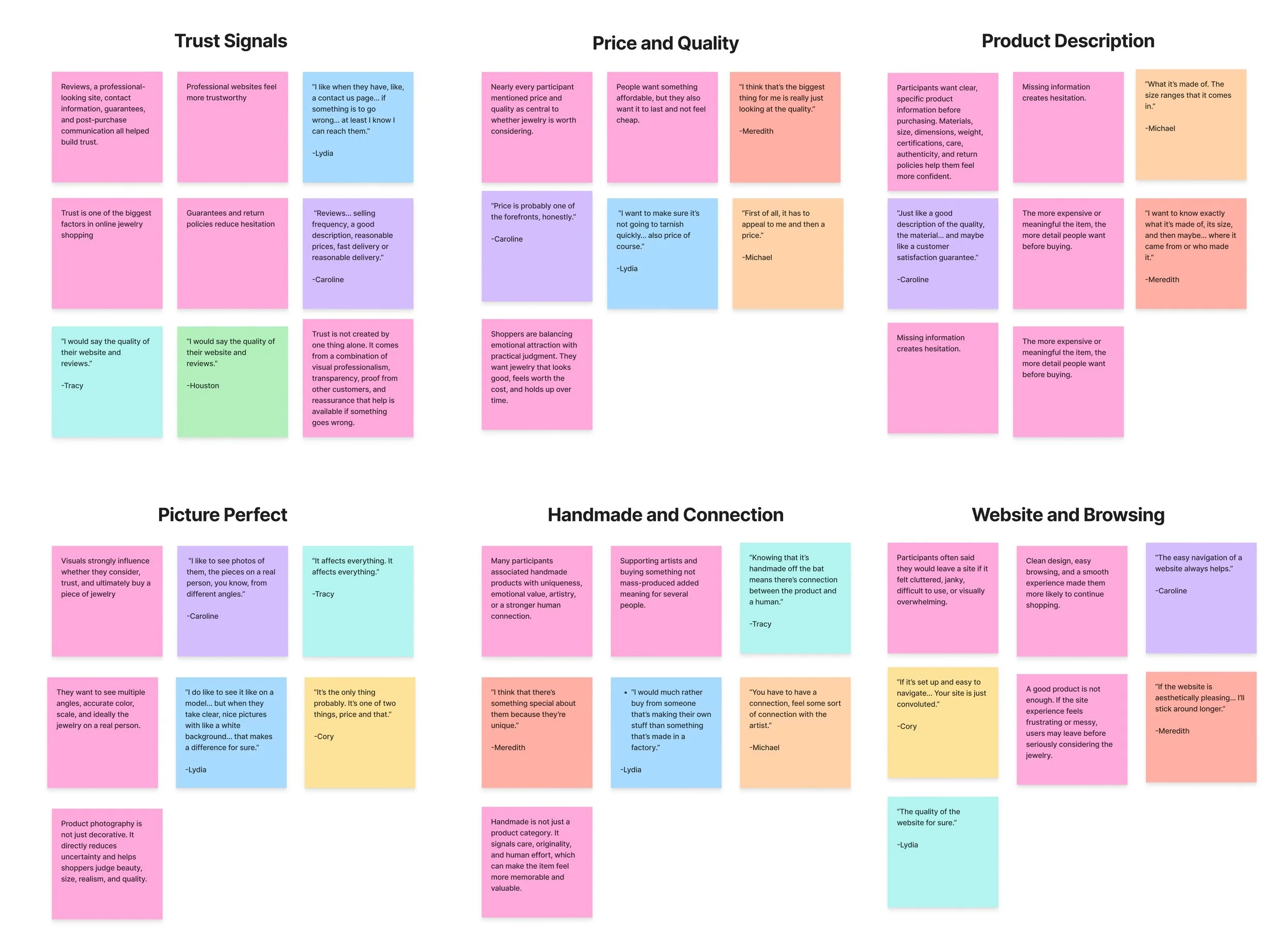
Affinity map.
Key Insights From Affinity Mapping
Trust must be intentionally designed into the shopping experience.
Buyers relied on reviews, transparency, and professional presentation to feel confident purchasing jewelry online.
High-quality visuals reduce uncertainty and support conversion.
Shoppers used photography to judge beauty, scale, quality, and realism before committing to a purchase.
Purchase decisions are emotional and practical.
Participants wanted jewelry that felt special, but still needed it to seem durable and worth the cost.
Clear product details help shoppers move forward.
The more valuable or meaningful the item, the more information users expected before buying.
Usability shapes whether shoppers keep exploring.
Clean layouts and easy navigation encouraged browsing, while clutter and friction pushed users away.
Empathizing with the users and bringing them to life
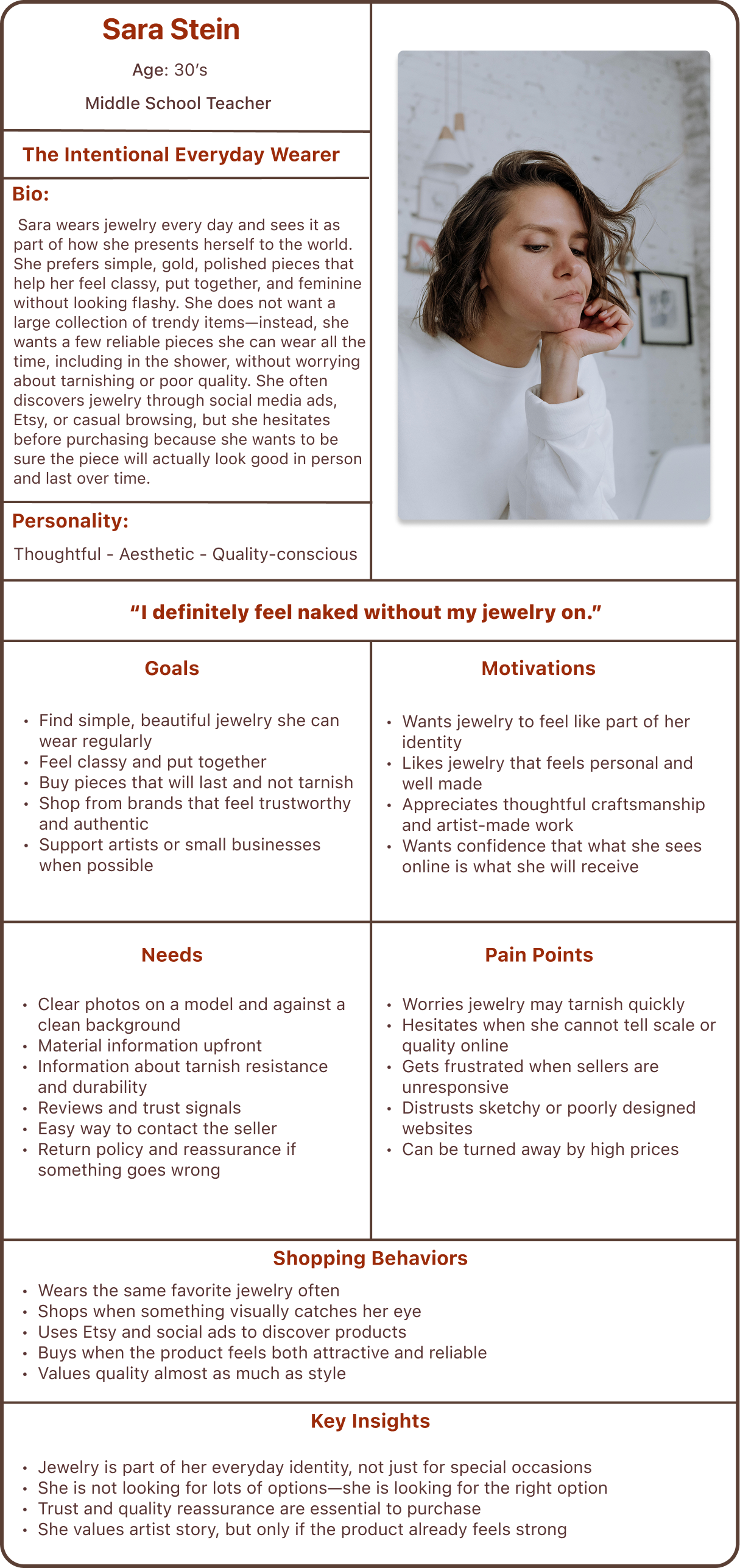
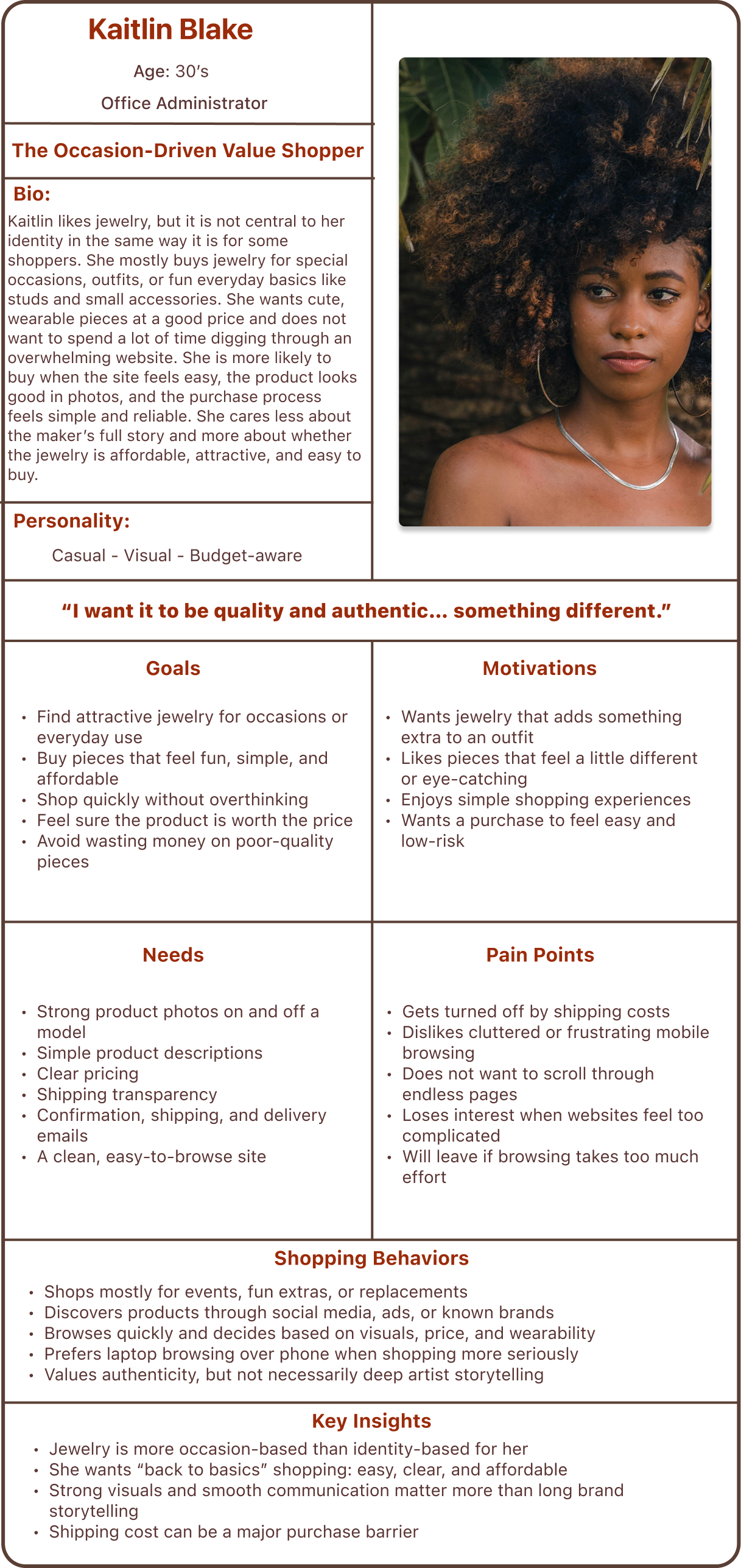
Persona 1: “The Intentional Everyday Wearer”.
What’s the problem?
Problem Statement
Trust Comes First
Shoppers looking for handmade jewelry need a clear, trustworthy, and visually informative online shopping experience because uncertainty around quality, materials, sizing, and seller legitimacy makes them hesitant to purchase. When these concerns are not addressed, users may abandon the site, limiting the business’s ability to build credibility and drive sales.
Goals for the handmade jewelry shopper
Build trust
The business wants to appear credible and professional.
Users want reassurance that the seller is legitimate and reliable.
Communicate product quality clearly
The business wants to show the value of handmade jewelry.
Users want proof that the product is well made and worth buying.
Create an easy shopping experience
The business wants users to stay on the site and convert.
Users want a simple, frustration-free browsing and buying process.
Persona 2: “The Occasion-Driven Value Shopper”.
Use strong product presentation
The business wants jewelry to look attractive and distinctive.
Users rely heavily on visuals to decide whether they are interested.
Support purchase confidence
The business wants more sales.
Users want enough information and reassurance to feel safe making a purchase.
Highlight what makes the brand special
The business wants to stand out in a crowded handmade market.
Users are drawn to authenticity, uniqueness, and artist-made products.
Develop
Prioritizing features that will build trust with customers
I began the develop phase by creating a feature set and user flow. I focused on features that would build trust while showcasing the client’s products.
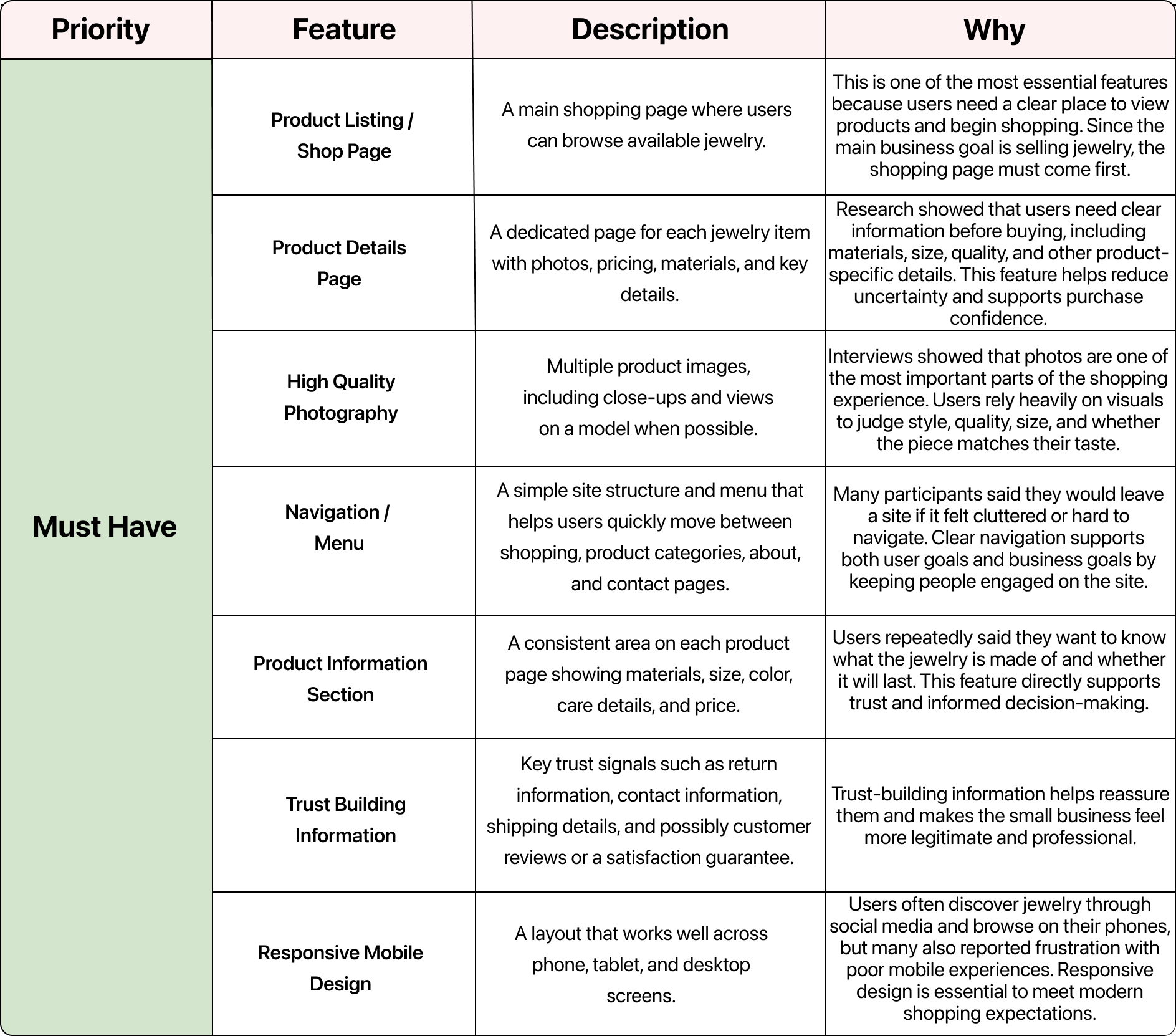
Feature set showing “must-haves.” Linked to full set in Figma.
Branding and visual direction for Caroline Designs
Client’s mood board.
Client’s style tile.
I sketched out three design directions and presented them to my client. Working together, we selected the strongest option, then continued to refine it while moving through testing.
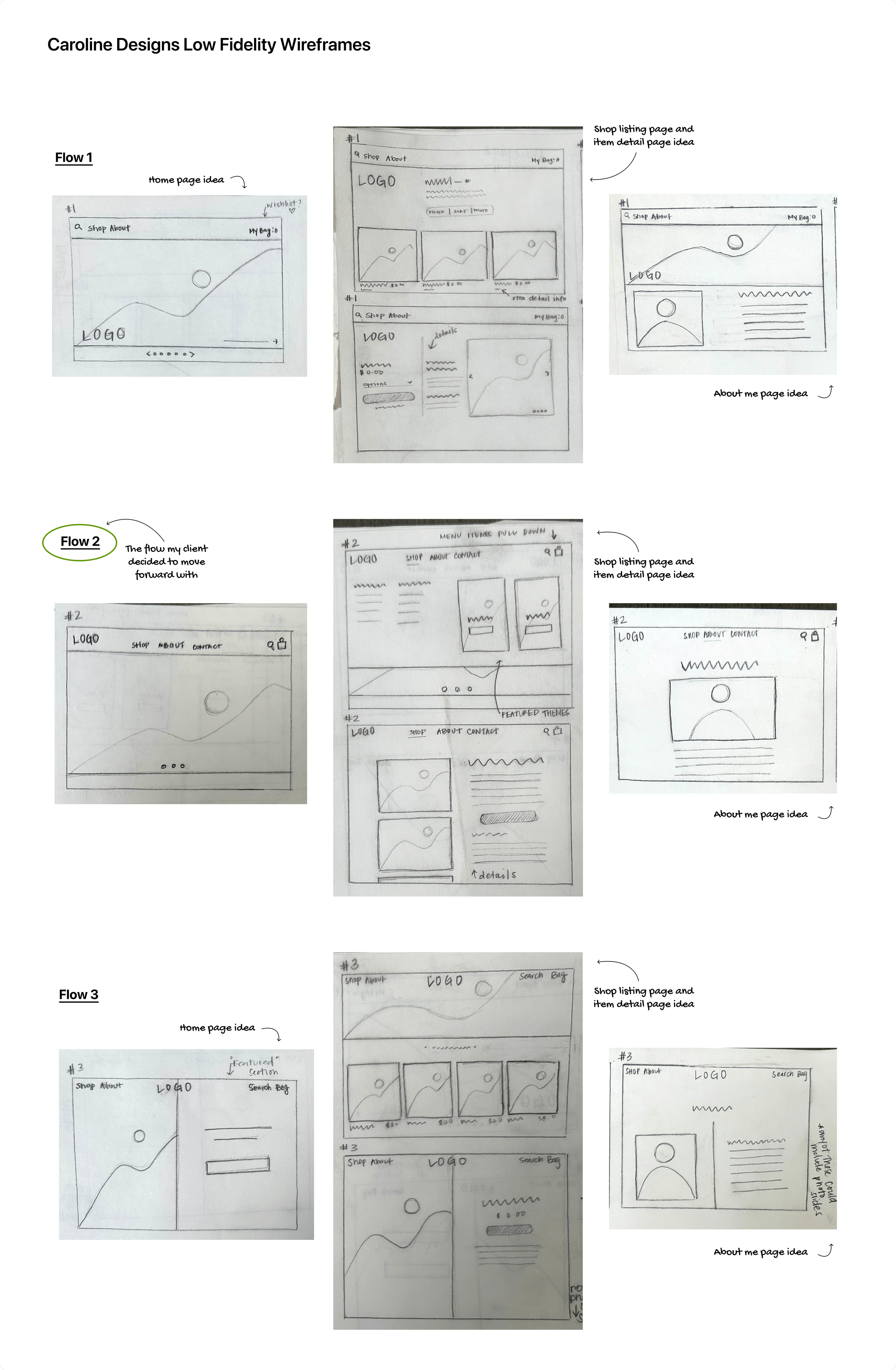
Low-fidelity wireframe sketches.
Low-fidelity wireframe sketches
Homepage.
Low-fidelity user testing and results
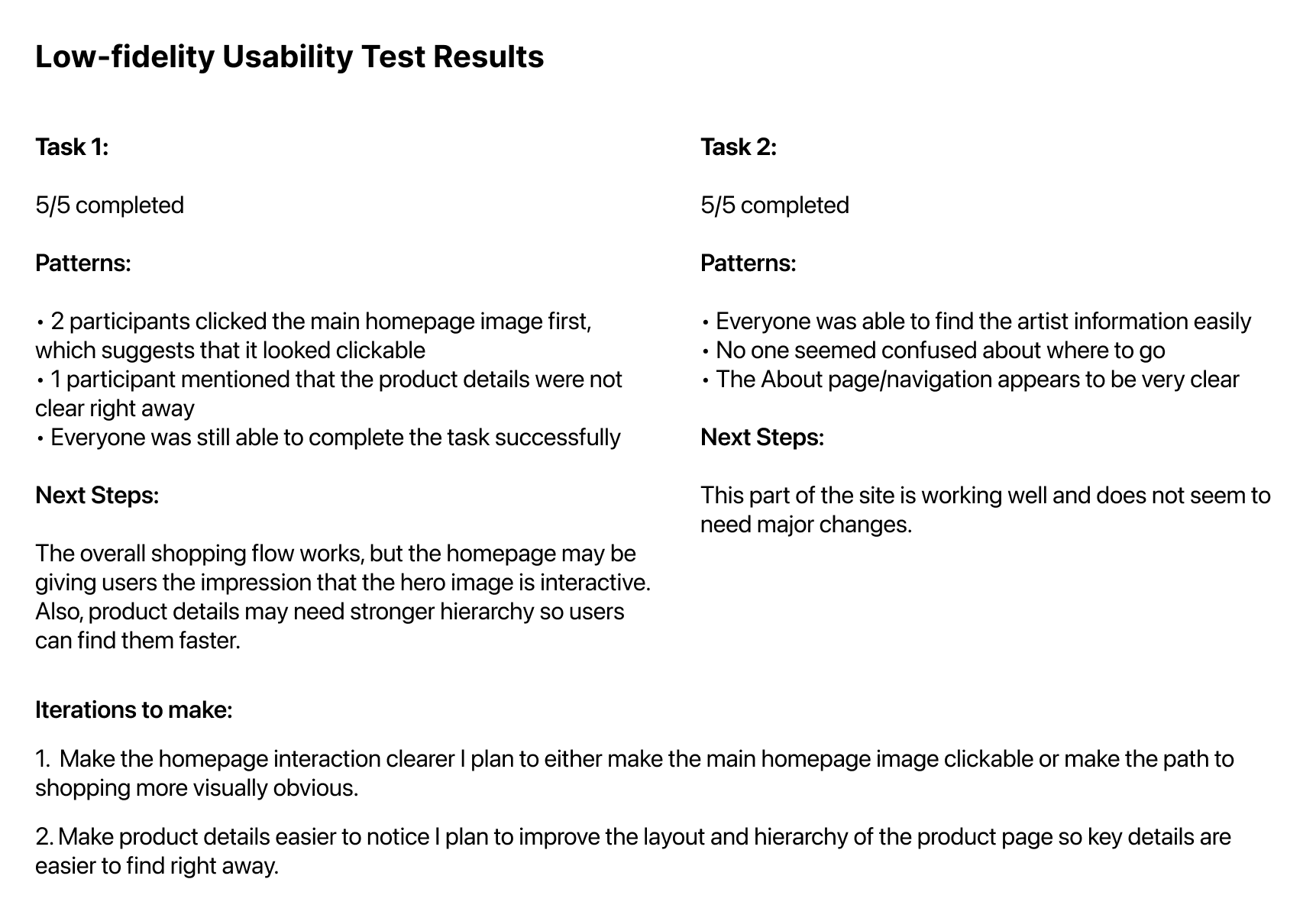
I tested five participants using low-fidelity wireframes in a Figma prototype.
Participants were asked to complete two tasks:
Task 1: Browse the site for a pair of earrings you would like, then read more details about them. After deciding you want to purchase them, show how you would proceed.
Task 2: You are interested in learning more about the artist who makes the earrings. How would you proceed?
Wireframes used in testing:
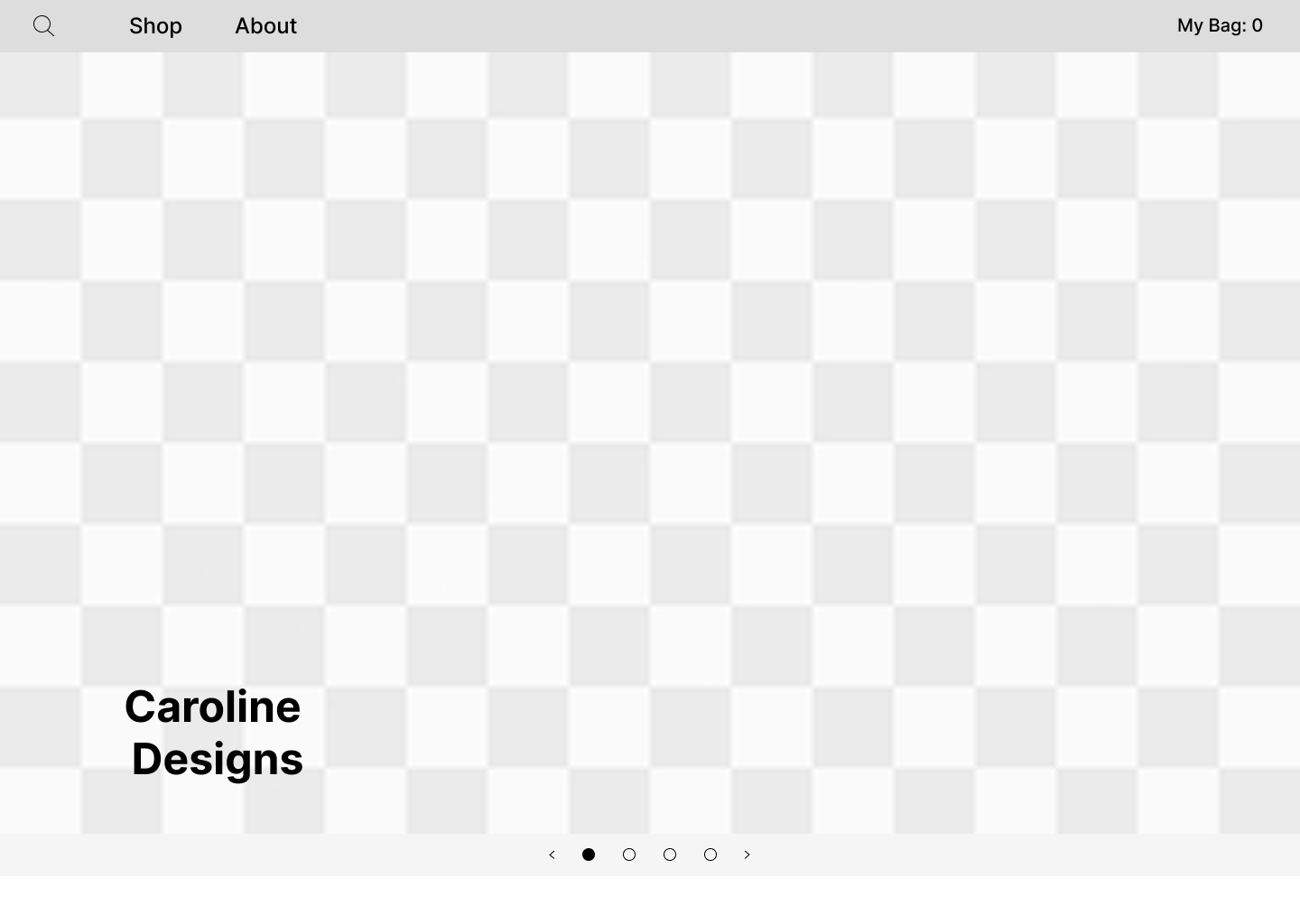
Homepage.

Item listing page.
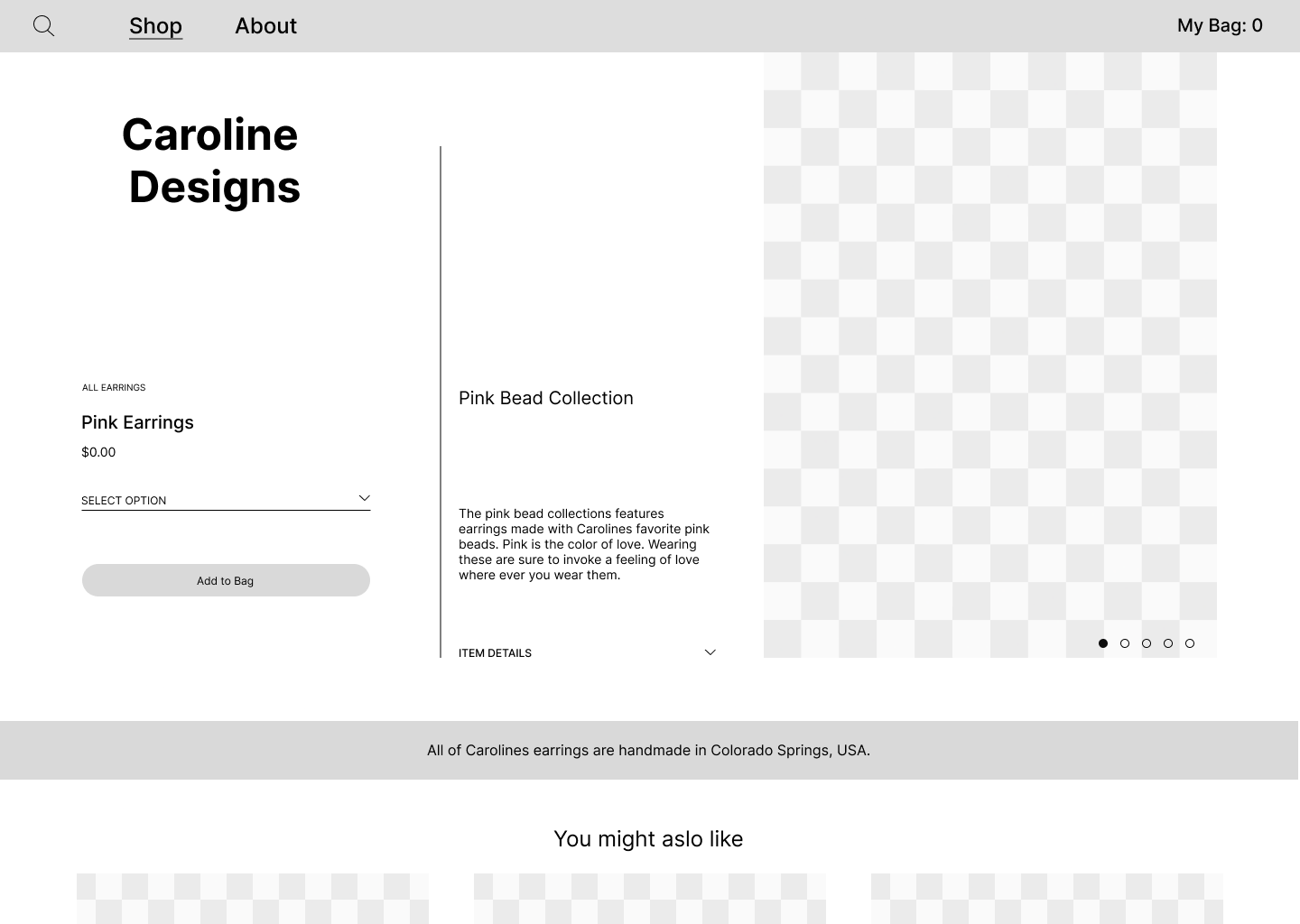
Item detail page.
High-fidelity user testing and results
I tested four participants using high-fidelity wireframes using Figma prototypes. Participants were asked to complete two tasks:
Task 1: Participants were asked to browse the site, find a pair of pink earrings, choose one they would consider, and read more about it.
Task 2: Participants were asked to find information about the artist behind the brand and explore the handmade aspect of the jewelry.
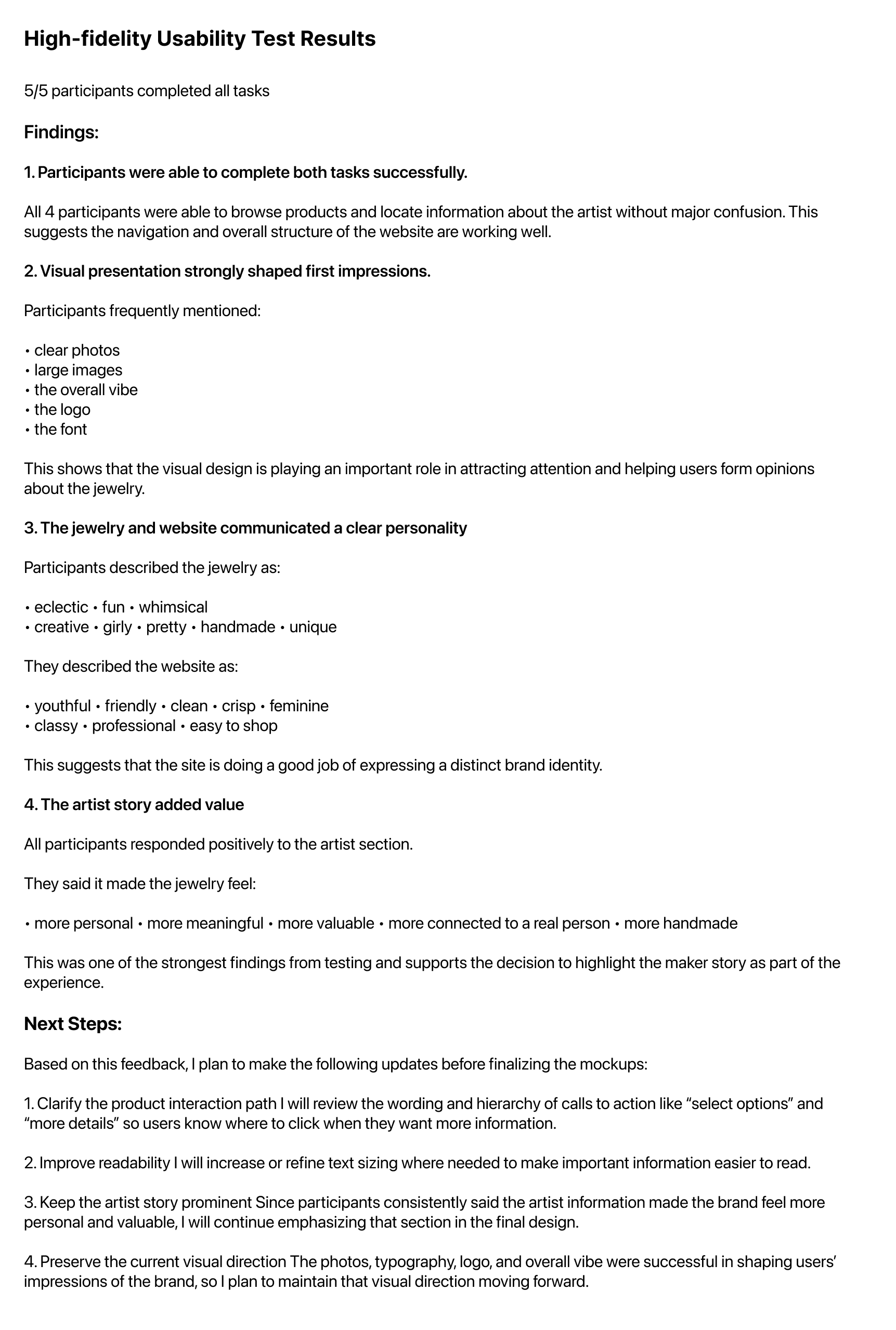
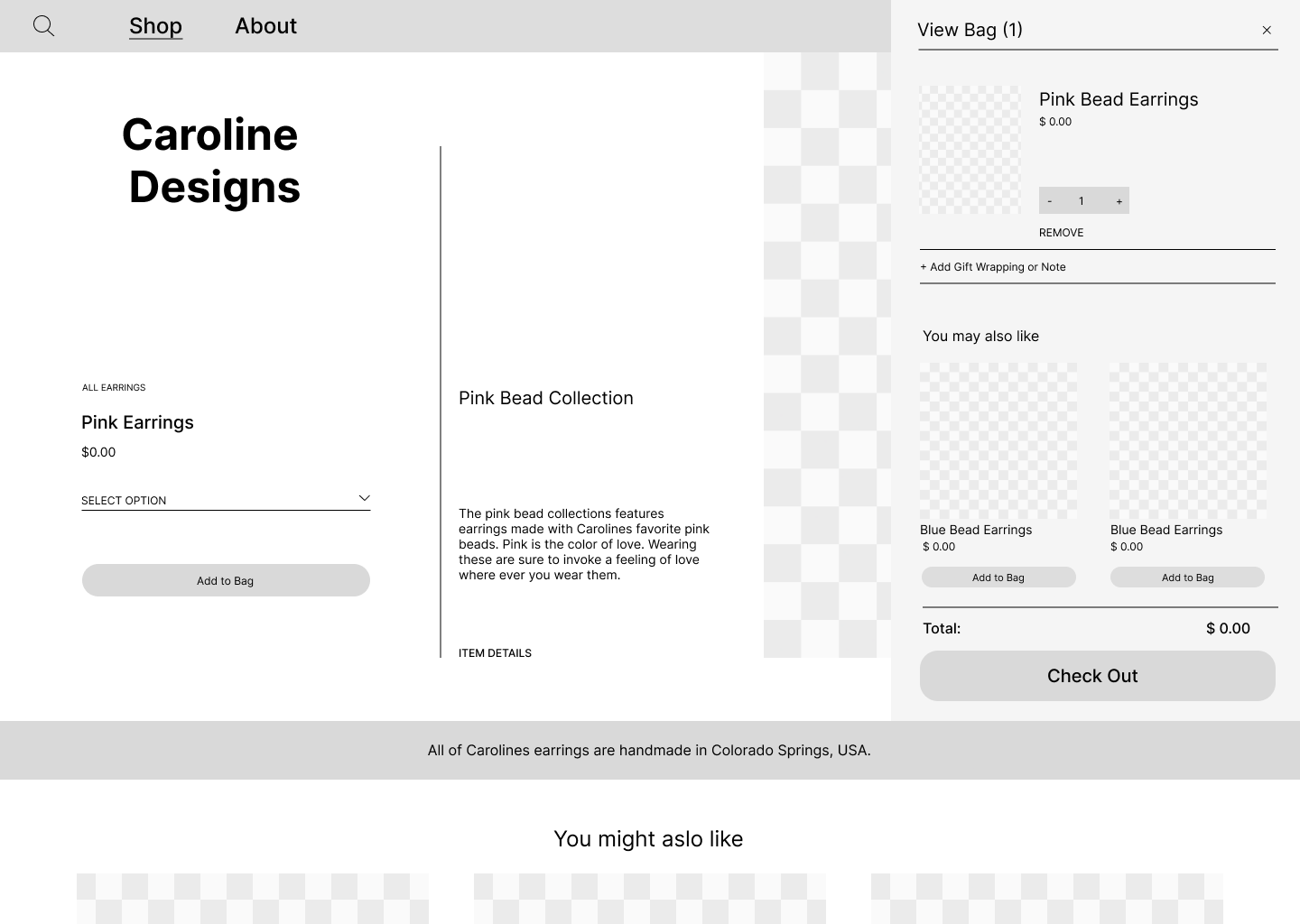
Adding to cart.
Add to bag.
Deliver
Caroline Designs is ready for launch!
Purchasing a pair of handmade earrings
The shopper lands on the homepage, browses, selects a product, and completes a purchase.
Learning more about the maker
The shopper lands on the homepage, opens the product page, and decides to learn more about the artist.
Final thoughts and takeaways
The the biggest insights from this project were that attractive design alone is not enough and that users also need clarity, trust, and confidence in order to engage. Also, the strongest digital experiences connect research insights, brand perception, usability, and business goals into one unified system.
Takeaways
I grew from thinking primarily about visuals to thinking more holistically about experience design.
I became more intentional about using research to guide strategy and design choices.
I learned how brand perception can directly influence usability and trust.
I practiced designing for both emotional appeal and functional clarity.
I strengthened my ability to create solutions that support both user needs and business outcomes.
What I’m most proud of
Creating an experience that feels both expressive and intentional. Rather than focusing only on making the site visually appealing, I used research and testing to shape a design that supports trust, communicates the brand clearly, and makes the jewelry feel desirable and meaningful.